Having diabetes is a constant battle with the body to keep yourself alive. It takes a considerable toll on a person for the rest of their life.
Zoe Draper has learnt how to accept and incorporate her illness into her life alongside her passion of netball. A box of lollies always at the desk, a banana before every game and an army of support from her teammates and coworkers.
When her insulin pump beeps, everyone knows what to do.
Draper went from injecting herself with insulin six to eight times a day to now injecting a cannula two to three times a week.
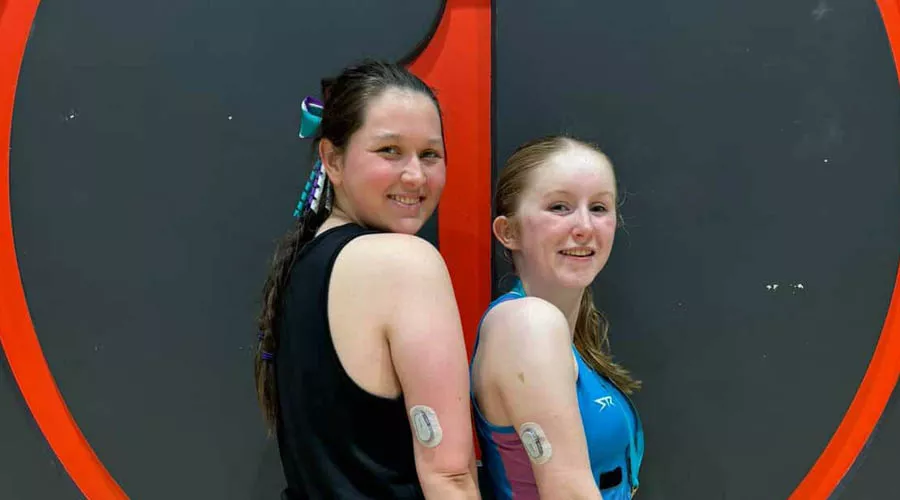
She’s accompanied by her insulin pump, Toby, alongside her continuous glucose monitor (CGM) that sits on her arm. It provides daily readings and blood sugar numbers every five minutes.
The 22-year-old is surrounded by sport, doing any form of physical activity every day. So whenever Draper is preparing to do any sport, she has to put Toby into exercise mode hours beforehand.
Exercise mode allows Draper to stay within a target range for her blood sugars, keeping that range slightly higher so she doesn’t go low when she’s exercising.
“I remember the first thing I asked when I was being diagnosed is, ‘can I still play netball?’,” Draper says.
“When I first started playing (after being diagnosed), I went low a lot in games, because you're still learning your insulin ratios. Exercise makes you drop anyway, and you have to learn how to balance it all.”
Burnout is inevitable because everything gets too much all at once. Draper recently had one where it impacted her work, everyday life and she just wanted to lay in bed all day and do nothing. Then the beep goes off and you can’t ignore it otherwise “you die”.
“You're trying to keep yourself alive 24/7, it's an extra 180 decisions a day,” Draper says.
“It's not just physically draining, but it's also mentally draining. You hear the beeps all the time, and you just get sick of it, and you just don't want to listen to it anymore.”
Type 1 diabetes is most commonly diagnosed in childhood and adolescence, with peak ages of diagnosis being between 4-7 and 10-14 years old. Draper was diagnosed 13 days before her 17th birthday.
She started to get leg cramps for three months which isn’t a typical symptom linked with type 1 diabetes.
Each night they progressively got worse, Draper was going to the toilet more frequently and was drinking significantly more water. But she was just making excuses of “I'm doing more running now, I'm getting up and about, I'm moving around that's why I'm drinking more water”.
What pushed her over the edge was losing 10 kilos in the last two weeks before getting diagnosed.
“I was like, ‘Oh I’m losing weight because I’m exercising,” Draper thought. “No, I wasn’t. I was physically ill.”
The doctors initially thought it was coeliac disease, but it ended up being ketones which are potentially deadly.
Ketones is the acidic part of your blood, which is when it doesn't have the sugar to break down into the cells, starts to break down the muscles and the fats, becoming acidic and dangerous, shutting down your body's organs.
Draper was borderline ketoacidosis before getting diagnosed, and just days or hours away from slipping into a coma.
During her journey out of hospital and adapting to the reality of her new lifestyle, Draper was joined alongside her family at Hazel Glen Netball Club who supported her every step to getting back out on court.
Draper participated in the Pink Ribbon Tournament which is an event where netball clubs and associations host games or events to raise awareness and funds for Breast Cancer Network Australia (BCNA). When it got cancelled due to COVID, she felt the urge to make something out of the situation.
“I literally woke up one day and was like, 'I could make a tournament',” she says.
“So, I started brainstorming ideas, looking at venues and wondering, 'Is this actually possible?’.”
Low and behold, the Tournament for Type 1 was born. In its first year, 24 netball teams registered across four divisions and the tournament managed to raise $4,000.
“The Type 1 Foundation, who we raised the money for, were so supportive of it, and they were providing some items to sell and donate in the raffle,” Draper says.
“They didn't realise how big it ended up becoming.”
The following year, everything doubled with over 500 people in attendance, 48 netball teams registered and $7,700 raised. It now enters its third year with the venue increasing to the State Netball Centre and numbers expected to only get bigger.
“It's just become an annual event and it's one of the biggest achievements of my life. It's such a big community to bring everyone together,”
“The goal is to celebrate and raise money sure, but it's to create a community of people like me, diabetics, who love netball, or have family members or friends who have someone they know who has type 1.”
Draper wants to promote education with diabetes because approximately 134,000 Australians live with type 1 diabetes. There are role models in netball at the elite level, such as Sarah Klau and Verity Simmons who express their troubles with diabetes, and Draper wants to follow in their footsteps.
“Be yourself, and don't be afraid to speak up and advocate for yourself, because there's a community out there who will be there to support you. I found mine and you can find yours.”